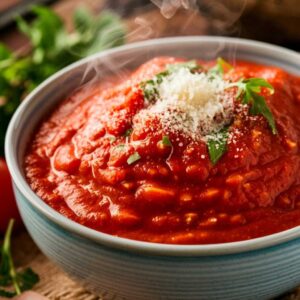
Keto Spaghetti Sauce Recipe
"Discover the perfect Keto-friendly alternative to traditional spaghetti sauce with our easy-to-follow recipe. Made with wholesome ingredients like tomatoes, garlic, olive oil, and a blend of Italian herbs, this sauce is not only low in carbs but also bursting with flavor. Customize the thickness and spice level to suit your taste, and enjoy it over zucchini noodles or alongside Keto-friendly meatballs for a satisfying meal that supports your Keto lifestyle."
Equipment
- Cutting board For chopping vegetables.
- Chef's knife For chopping garlic, onion, and any other ingredients.
- Large Saucepan or Pot: For cooking the sauce.
- Wooden Spoon or Silicone Spatula: For stirring the sauce.
- Measuring cups and spoons For measuring ingredients.
- Blender or Immersion Blender (Optional) For achieving a smoother sauce consistency if desired.
- Can opener If using canned tomatoes or tomato paste.
- Small Bowl (optional): For mixing seasonings or sweetener before adding to the sauce.
Ingredients
- 2 tablespoons olive oil
- 4 cloves garlic, minced
- 1 small onion, finely chopped (optional, can be omitted or used in moderation for Keto)
- 28 ounces can crushed tomatoes (or 4 large fresh tomatoes, diced)
- 2 tablespoons tomato paste (optional, for thicker consistency)
- 1 tablespoon Italian seasoning (or 1 teaspoon each of dried basil, oregano, and thyme)
- 1 teaspoon salt (or to taste)
- 1/2 teaspoon black pepper (or to taste)
- 1/2 teaspoon red pepper flakes (optional, for a bit of spice)
- 1 teaspoon keto-friendly sweetener (optional, like erythritol or stevia, to balance acidity)
- 1/4 cup fresh basil, chopped (optional, for added freshness)
Instructions
Prepare the Ingredients:
- Finely chop the garlic and onion (if using).
- Dice the fresh tomatoes if not using canned.
Cook the Sauce:
- Heat olive oil in a large saucepan over medium heat. Add the minced garlic and chopped onion (if using) and sauté until fragrant and the onion is translucent.
- Add the crushed tomatoes (or diced fresh tomatoes), tomato paste (if using), Italian seasoning, salt, black pepper, and red pepper flakes (if using). Stir to combine.
Simmer and Serve:
- Bring the sauce to a gentle boil, then reduce the heat and let it simmer for about 20-30 minutes, stirring occasionally. If using, stir in the keto-friendly sweetener to balance the acidity.
- Once the sauce has thickened and the flavors have melded, taste and adjust seasoning if necessary. For a smoother consistency, use a blender or immersion blender.
- Serve the sauce over your favorite Keto-friendly noodles or with grilled meat.